Monday, 26 September 2011

Australia - Cooktown

From Daintree, we went to the next town north, a mere 5 hours worth of driving along outback scrub.  We got to a rise and looked back at the last 3 hours over nothing...

Still, it was quite beautiful

The mountains were lush compared to the lowland we'd been driving through

We would possibly pass 5 vehicles an hour

We arrived in Cooktown, which is where Captain Cook first set foot in Australia, in June 1770

Even though we were in Australia, Paul found it had not to adopt the Asian photo pose

We climbed Mt Cook and it was soooo windy, because of the SE Trade Winds - vague memories of something from school

We nearly walked into this web, with the spider as big as the span of my hand

And this spider was next to the other one, and was even bigger!

There were literally hundreds of these lizards darting out of our way, as we climbed to the top and back down

We got down from Mt Cook, crossed over an estuary at Finch's Bay, only accessible at low tide, keeping an eye out for crocs

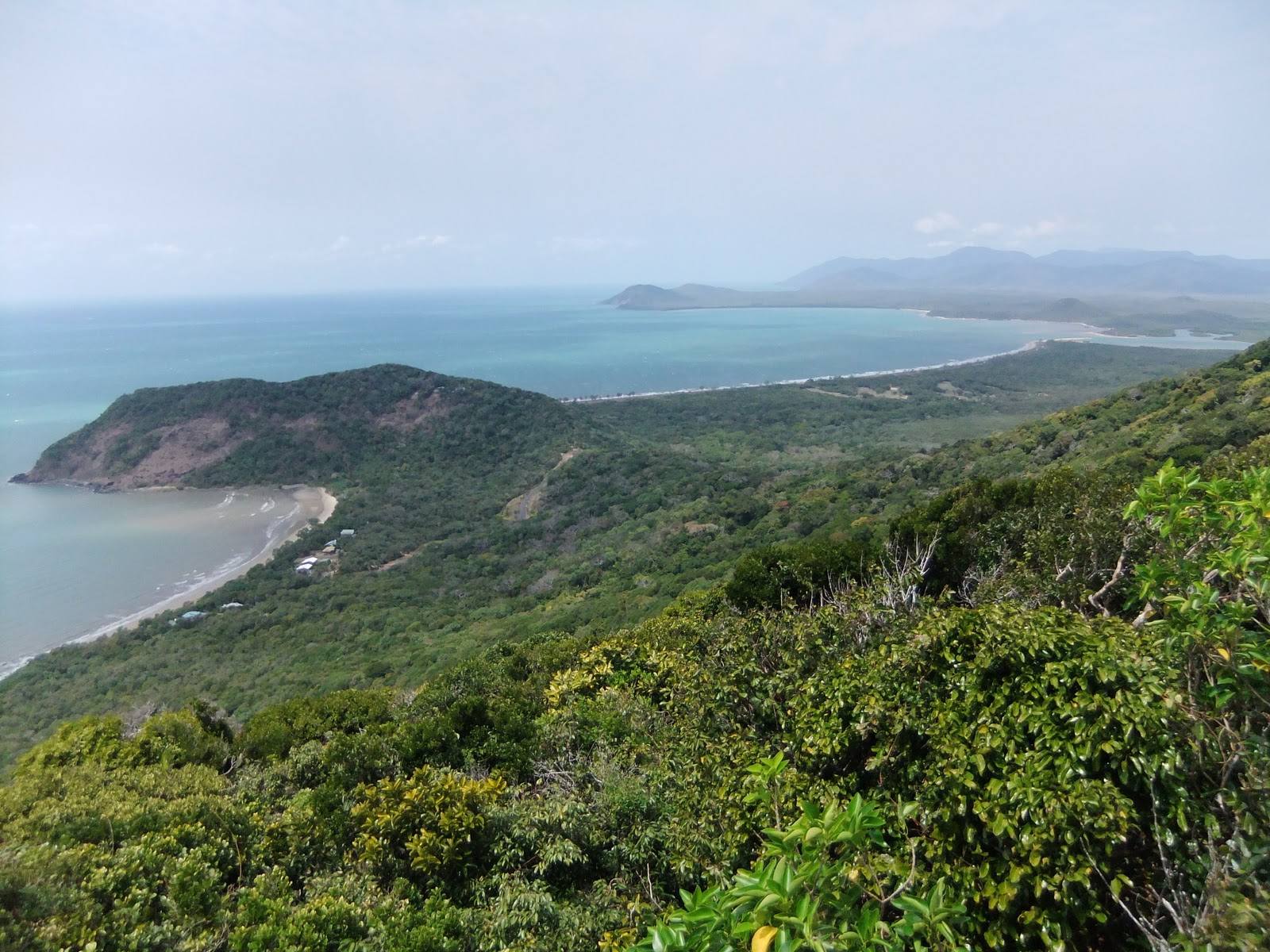
We then climbed up the viewpoint overlooking the town, a very small town by our standards, but all laid out before us..

The view, where the old lighthouse was, was 360 degrees and here's overlooking the river that runs through Cooktown

And some mountains on the other side

A replica of the original lighthouse

This is a monument to Captain Cook

And when the new towners started to have problems with the local indiginous people, they wrote to England for help and England sent this cannon, with around 5 men to help defend it - generous!

This is a musical ship.  Meant for kids I imagine, but I was having a fab time banging on the pipes and planks, until I realised a load of adults watching me... reckon they were waiting for a go themselves lol

Cooktown is very last century.  This is the main street

Not a 'Top Pub' as I'd say, more to do with them being only 3, the other 2 being Middle and Lower Pubs.

Ahh, cooking on an open fire...

Makes you stink of smoke....
....and takes 4 times longer, but you have fun whilst cooking...

Thursday, 22 September 2011

Australia - Daintree & Cape Tribulation

We arrived in Australia, hired a car in Cairns, then drove north to Daintree and started our camping expedition

Daintree has a river that runs through it....with crocs!

This is the first croc we saw

Not all the roads are sealed in Australia, reminds me of Colin McRae on the old PS3 :-)

Due to the lack of bad winters, here in Queensland, there are still some old vehicles to be seen...

Daintree is on the edge of a National Park and very beautiful, so we went for a walk

And found somewhere with no crocs where we could have a swim

The water was sooooo cold, even though air temp was in the 30's.  Heart attack conditions

Still, we braved it..

It was about 8km away from where we were staying and locals were stopping as they passed in their cars asking if we knew how far it was.  To be fair, it was midday, very hot etc, but as there were no mad dogs out, we had the place to ourselves..

On the way back it looked stunning with the low sun and contrasts

As the Daintree river flows into the sea, it is one of the few places in the world where tropical rainforest and sea meet

In the distance is where the river Daintree meets the sea

We went further upcoast, but the beaches were not for swimming.  As well as crocs, there were also Box Jellyfish around, which can kill you

So it was no surprise that the beaches were free

This is Cape Tribulation.  Not as bad as it sounds.  Is called Tribulation as when Captain Cook arrived here from further north, his vessel beached and broke on a reef and he wrote in his log, '..this is where our troubles began..'

The Mangrove Trees, which can survive salt and fresh water and are often a sign of crocs

As we couldn't go swimming, we went for another walk

Found an old rock pool

And went back to our swimming spot

We also went on a boat on the river to spot some crocs

Although we only saw one, which was actually across from the jetty, typical. 
These crocs are Esturine, or Saltwater Crocodiles.  They can survive in either saltwater or freshwater, but differ from freshwater crocs in that they have a gland at the back of the throat which means they can secrete salt.  They are generally bigger and have been recorded to be up to 8m in length.  They were nearly hunted to extinction here, but are now protected animals and the biggest here is about 4m, so is prob only around 40 years old.  They can get to around 90 years old.  They are dangerous to humans at around 2.5m